WAI O TE MANAWA
Prioritising health of the city’s waterways through sponge city design
Angelu Suerte Felipe, Wyatt Pattison, Jonelle Crowley-Gilmore - Group 04
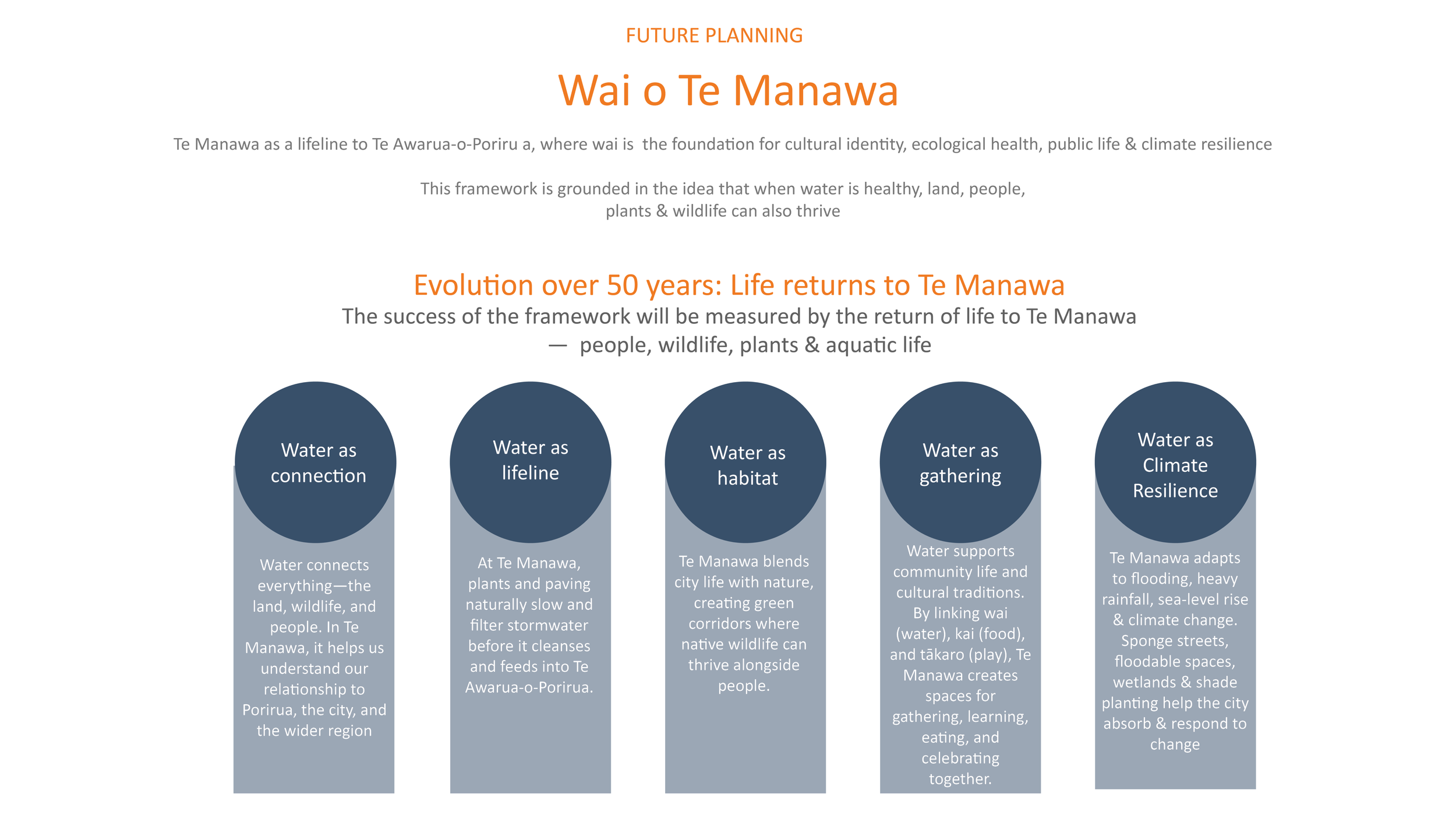
Through our analysis of Porirua we determined that one of the defining factors was people’s need to reconnect to Te Awarua o Porirua, and that the health of the waters which meet and mix with the harbour need a great level of support to ensure a healthier future during this time of climate change.
There is a significant opportunity to be found in Te Manawa where the form of the city has reshaped the waterways, but we have chosen to reframe this to allow water to shape the city of the future. There is great need amongst the communities of Porirua to engage with and celebrate the water so we have chosen to focus on this through applying a sponge city concept.
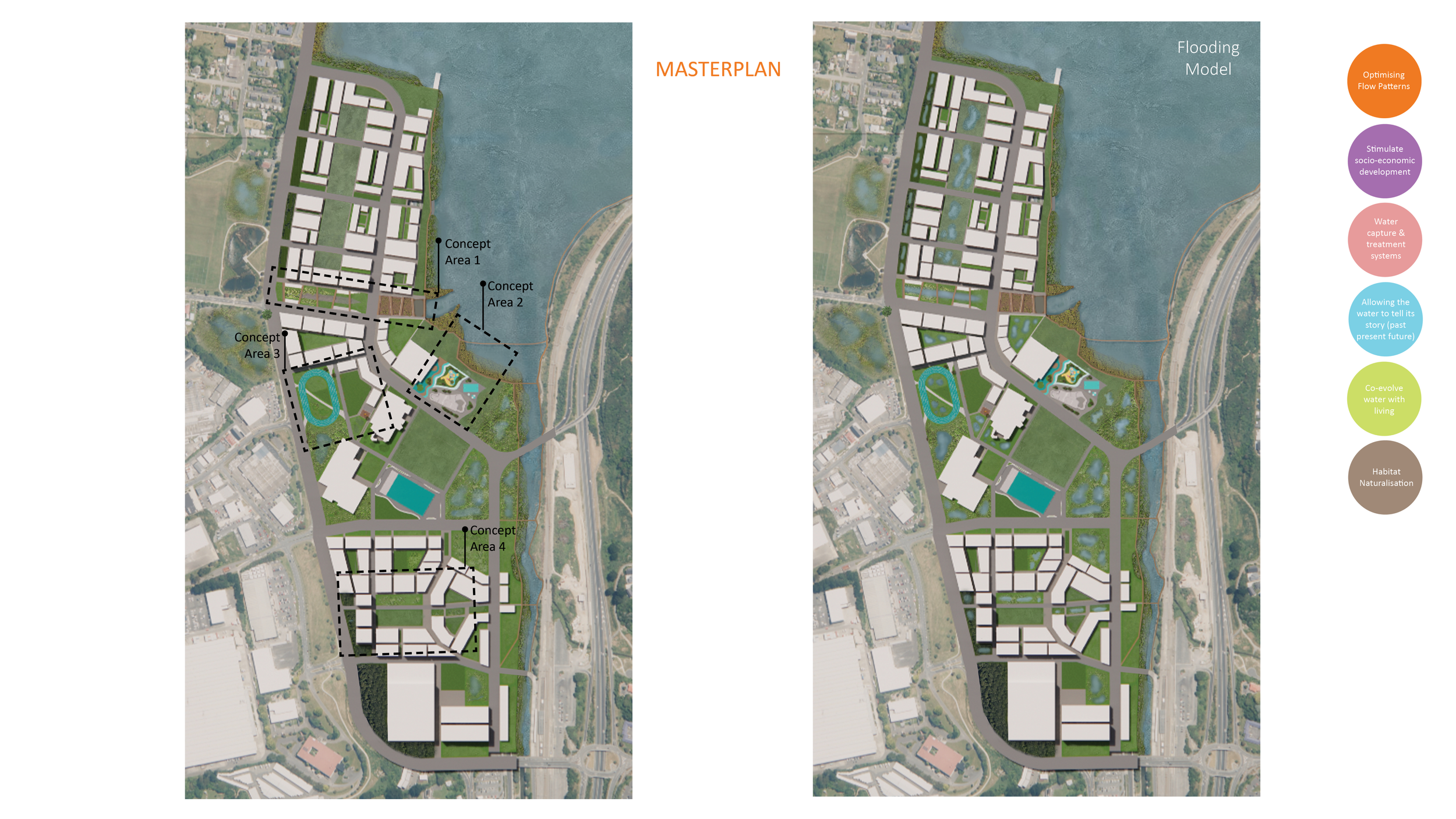
Our strategy is to activate, embrace and strengthen Te Manawa through providing healthy spaces and places where cultures can be celebrated, nature can be prioritised, and the heart of the city can be reinvigorated through its network of waterways.
Our design intention is about putting water first and redesigning the lived experience of the city to co-evolve with it so that as the city grows over time the two are interwoven. Life needs water and for the future of Te Awarua o Porirua that means meaningful change on the part of people who live here, primarily through medium-density neighbourhood block- style living where community and interaction with water are at its heart.
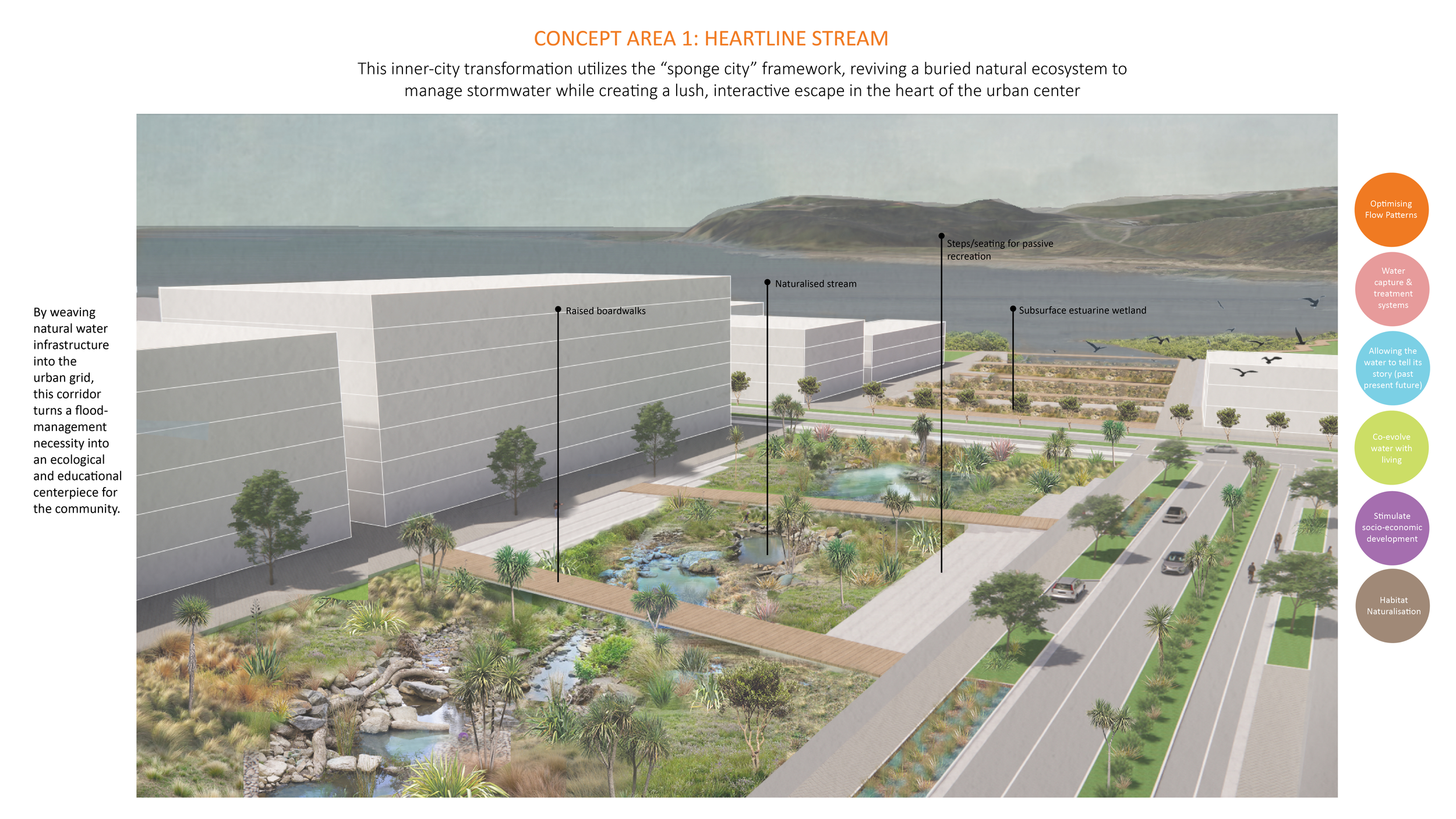
Our design tools have focussed on redesigning the streetscapes of Te Manawa as blue- green infrastructure to cope with heavy rain, plus a vast network of waterways and wetlands to slow and cleanse stormwater before it reaches the harbour. Combining native planting appropriate to the location with community participation can strengthen ties between the people of Te Manawa.
We have also expanded the centre of the city to become a larger sporting and activity destination, while ensuring water is as much a part of these as the rest of the city, further strengthening the identity of Te Manawa as a sponge city of the future.

please provide feedback for this design
• use the QR code or click this link